
Published September 21, 2026
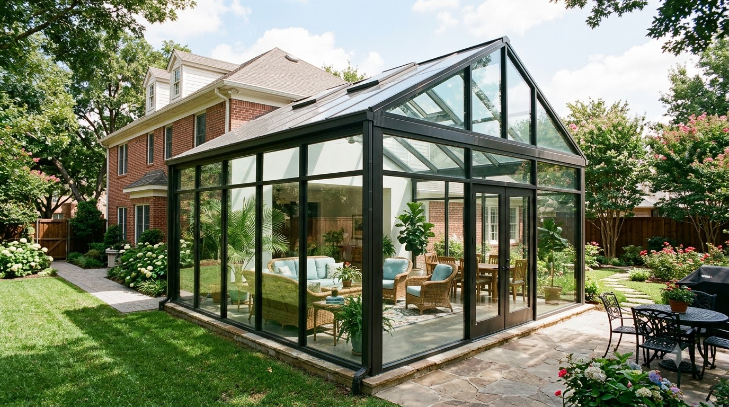
A sunroom addition in Dallas runs $20,000 to $80,000 in 2026, depending on whether it’s three-season glass or a fully conditioned four-season room. A covered patio costs less — usually $10,000 to $40,000. Both add real living space without the permit complexity of a full second story. The right choice depends on how you’ll use the room and how much of the Dallas summer you want to spend in it.
- Sunroom vs. covered patio: what’s the real difference
- 2026 Dallas cost snapshot
- Permits and Dallas-specific regulations
- Materials that hold up in DFW weather
- Neighborhood factors that change your project
- Timeline: how long it actually takes
- What to look for in a contractor for this project
- FAQ
Sunroom vs. Covered Patio: What’s the Real Difference
A sunroom is an enclosed room with glass or screen walls, usually built on its own foundation. A covered patio is an open-air structure with a roof, no walls. That difference drives everything else — cost, permits, and how many months a year you’ll actually use the space.
A three-season sunroom has no HVAC. It works well from March through November in Dallas but gets uncomfortable in July and August without supplemental cooling. A four-season sunroom ties into your home’s HVAC system or gets its own mini-split. It costs more upfront but earns its keep during a Dallas summer.
Covered patios stay open to the outdoors. They’re cheaper, faster to build, and don’t need the same insulation or window package. Many Dallas homeowners add one first, then convert it to an enclosed sunroom later if the budget allows.
2026 Dallas Cost Snapshot
| Project type | Typical range (2026) | What drives the cost |
|---|---|---|
| Covered patio (basic) | $10,000–$20,000 | Roof structure, posts, ceiling fans, lighting |
| Covered patio (upgraded) | $20,000–$40,000 | Outdoor kitchen prep, stone columns, tongue-and-groove ceiling |
| Three-season sunroom | $20,000–$45,000 | Foundation, glass panel system, no HVAC tie-in |
| Four-season sunroom | $45,000–$80,000+ | Insulated walls, HVAC or mini-split, electrical, permanent foundation |
A note on these numbers: we haven’t yet verified sunroom-specific pricing against current DFW contractor bids the way we have for kitchens and bathrooms. These ranges come from general national remodeling cost data, adjusted for the fact that DFW materials and labor typically run close to the national median for this project type. Treat them as a starting planning range, not a quote — get written bids from a licensed DFW contractor before budgeting a specific number.
Compare this against whole-home addition costs on our Dallas remodeling cost guide — a sunroom sits at the low end of what a full addition costs, since you’re not extending the foundation footprint of the main house or tying into structural framing the same way.
Permits and Dallas-Specific Regulations
Any sunroom or covered patio addition in Dallas city limits needs a building permit through the City of Dallas Development Services Department. Electrical work for lighting or an HVAC tie-in needs a separate trade permit.
If your addition sits within the required setback, you’ll also need a zoning review. Setback rules vary by lot size and zoning district, so don’t assume your side yard has room until the city confirms it.
Homes in Highland Park and University Park go through the Town of Highland Park Building Department instead of the City of Dallas — a separate process with its own architectural review. Add two to four weeks for that review if your addition touches the exterior in a visible way.
HOA approval is a separate step from the city permit. In Oak Lawn and Uptown condo developments, exterior additions often need HOA sign-off before you can even apply for a city permit. Check your HOA’s architectural review timeline before you set a start date.
Materials That Hold Up in DFW Weather
Dallas summers push 100°F for weeks at a time. That heat load matters more for a sunroom than almost any other addition type, since you’re adding a room made mostly of glass.
Low-E, dual-pane glass cuts summer heat gain significantly compared to single-pane. It costs more per panel, but it’s the difference between a sunroom you use in July and one you avoid. For covered patios, a metal or composite roof handles Dallas hailstorms better than shingle, and it reflects more heat than dark asphalt.
Foundation type matters too. Most Dallas homes built after 1980 sit on a post-tension slab. Extending that slab for a sunroom foundation needs a specialist who won’t cut into the tension cables — this isn’t a job for a general handyman crew. Expect $2,000 to $5,000 more for slab work that ties into a post-tension foundation correctly.
What Drives the Cost Up (and What Keeps It Down)
Three things push a sunroom quote toward the high end of the range. Glass quality is the biggest one — low-E, argon-filled dual-pane units cost more per panel than basic single-pane, but they’re the reason a four-season room stays usable in a Dallas summer. Skimping here is the most common regret we hear about from homeowners a year later.
Foundation work is the second driver. If your lot has expansive clay soil or a post-tension slab, budget for specialist foundation work upfront rather than finding out mid-project. That’s not a cost you can shop around — it’s a cost you plan for.
Electrical scope is the third. A sunroom with just a ceiling fan and outlets costs far less to wire than one with a mini-split, recessed lighting, and a media setup. Decide how you’ll actually use the room before you finalize the electrical plan, not after.
What keeps cost down: a covered patio instead of full enclosure, standard-size stock windows instead of custom shapes, and building on an existing slab extension instead of a new footprint. None of these compromise quality — they just remove complexity the budget doesn’t need.
Most residential permits in Dallas start at $167 per trade. A sunroom project with a building permit plus a separate electrical permit typically runs $300 to $600 in total city fees. If your project needs engineer-stamped foundation plans because of soil conditions, add $2,000 to $5,000 for that engineering work upfront — it’s a real cost, not a formality.
Neighborhood Factors That Change Your Project
East Dallas and Lakewood homes built before 1980 often sit on expansive clay soil that moves with the seasons. A sunroom foundation needs to account for that movement, or you’ll see cracking within a few years. Ask your contractor how they’re handling soil movement before signing anything.
In Preston Hollow and Highland Park, expect the HOA architectural review to add real time to your schedule — plan for 4 to 8 weeks between design approval and permit issue. Frisco, Plano, and McKinney contractors often book 6 to 8 weeks out during peak season, so a spring start means calling in winter.
Oak Cliff homes vary widely in existing condition, so a sunroom tying into an older structure may need more prep work than the same addition on a newer North Dallas home. Get a contractor to inspect the tie-in point before you finalize a budget.
How Long Does a Sunroom Addition Take
A covered patio typically takes 2 to 4 weeks from permit approval to completion. A three-season sunroom runs 4 to 6 weeks. A four-season sunroom with HVAC and electrical work takes 6 to 10 weeks.
Permit approval itself adds 1 to 3 weeks in Dallas city limits, longer in Highland Park or if HOA review is required. Factor that into your timeline before you commit to a move-in date or a holiday deadline.
Ready to get matched with a vetted DFW contractor for your sunroom or patio project? We connect Dallas homeowners with licensed, insured independent contractors — no cost to you, no obligation. Call (432) 217-9260 or request a free quote today.
What to Look for in a Dallas Contractor for This Project
Not every general contractor builds sunrooms regularly. Ask to see photos of at least two completed sunroom or patio projects, not just a general portfolio.
Confirm the contractor is Texas-licensed and carries at least $1M in general liability insurance — verified through TDLR, not just self-reported. Ask specifically how they’ll handle your slab type and soil conditions, since a contractor who can’t answer that question hasn’t done many of these in Dallas.
Get three bids before you decide. A wide spread between bids usually means one contractor is scoping the job differently than the others — ask each one to itemize foundation work, glass or roofing package, and electrical separately so you’re comparing the same scope.
FAQ
Does a sunroom addition need a permit in Dallas?
Yes. Any enclosed addition needs a building permit through the City of Dallas Development Services Department, plus a separate electrical permit if you’re adding lighting or HVAC. Covered patios need a permit too if they’re attached to the house.
Can I convert a covered patio into a sunroom later?
Often, yes — if the foundation and roof structure were built to support the added weight of glass walls and insulation. Tell your contractor upfront if you’re planning a future conversion so they build the base correctly the first time.
Will a sunroom addition increase my home’s value?
A well-built four-season sunroom typically recoups a meaningful share of its cost at resale, though exact figures vary by neighborhood and finish quality. A three-season sunroom or covered patio adds less resale value but costs less to build.
How much does HVAC add to a sunroom project?
Tying into your existing system or adding a mini-split typically adds several thousand dollars, depending on the size of the room and whether your main system has capacity to spare. A licensed HVAC contractor should confirm this before you finalize your budget.
Do I need an engineer for a sunroom foundation?
If your home sits on a post-tension slab or expansive clay soil — common across East Dallas and Lakewood — an engineer’s review is worth the cost to avoid cracking or foundation issues later. Your general contractor should be able to recommend one.
Is a covered patio cheaper to insure than an enclosed sunroom?
Usually, yes. An enclosed sunroom adds conditioned square footage to your home, which can raise your homeowner’s insurance premium slightly. A covered patio, since it’s open-air, typically doesn’t change your premium the same way. Ask your insurance agent before you finalize either project so the number isn’t a surprise later.
Ready to add a sunroom or covered patio to your Dallas home? We match you with a vetted, licensed DFW contractor — free, no obligation. Call (432) 217-9260 or request your free quote now.
Related Reading
- Home Additions in Dallas: Complete Guide
- Second Story Additions in Dallas: Costs, Challenges & Considerations
- General Contractor Costs in Dallas: 2026 Pricing & Rates
