
<em>Published: October 11, 2026 | Updated: October 11, 2026 | By: John Foster</em>
The best flooring options for Dallas homes are luxury vinyl plank, porcelain tile, and engineered hardwood. All three handle a concrete slab, summer heat, and a busy household. LVP is the budget pick. Tile wins in wet rooms. Engineered wood gives you real wood without the moisture risk of solid boards on a slab.
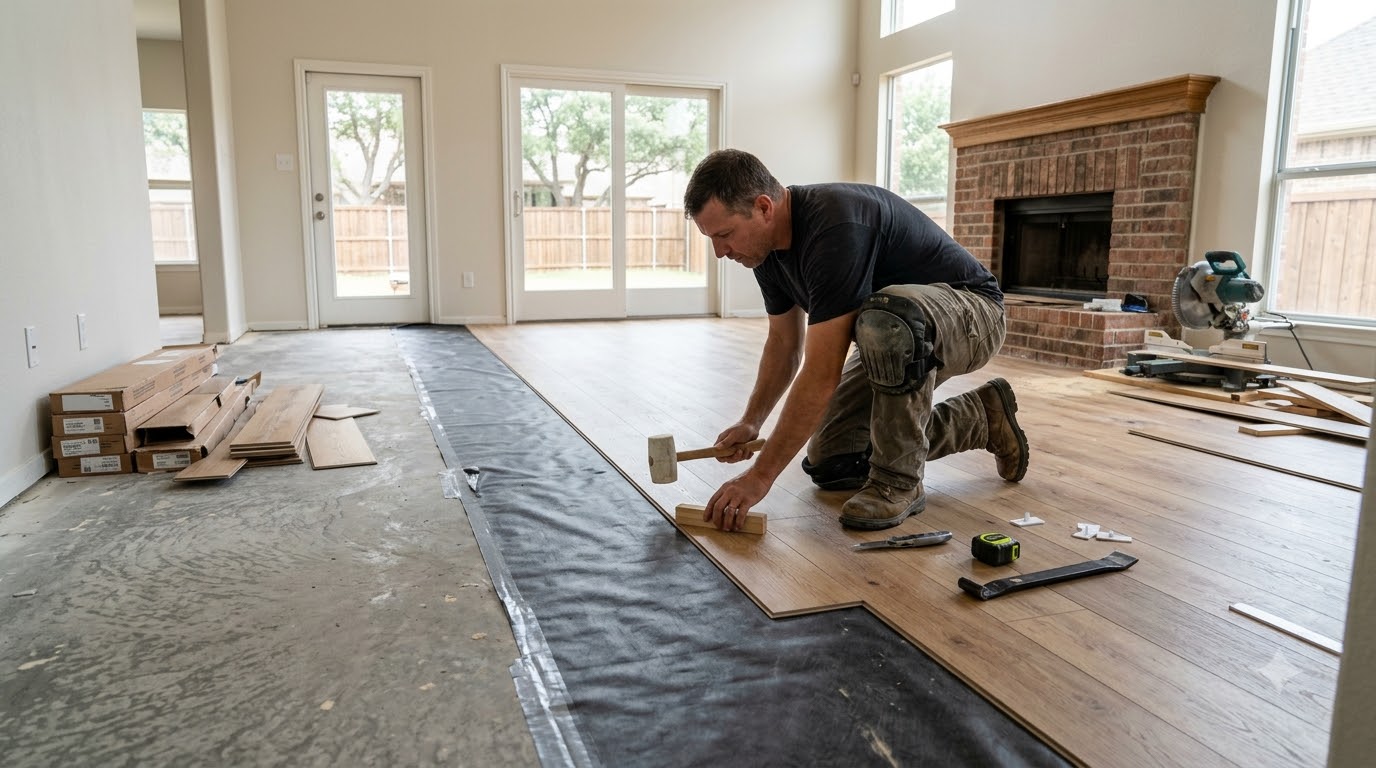
Cost is the next question. Nationally, installed flooring runs about $1.50 to $30 per square foot, per HomeAdvisor’s June 2026 data. Where you land depends on the material, the room, and what sits under your old floor.
Dallas General Contractor is a referral service. We match DFW homeowners with vetted, licensed, insured independent contractors. We don’t do the work ourselves. So this guide compares costs, durability, and style, and tells you what to ask before you hire anyone.
Table of Contents
- The best flooring options for Dallas homes, room by room
- Flooring costs compared (2026)
- Why Dallas homes are hard on floors
- Each flooring option, up close
- Durability and style side by side
- Neighborhood notes across DFW
- Permits and older-home checks
- What to ask a flooring contractor
- FAQ
The Best Flooring Options for Dallas Homes, Room by Room
No single floor is best for every room. A kitchen spill and a bedroom carpet have different jobs. Here is a fast way to match the floor to the room.
| Room | Best pick | Runner-up | Why |
|---|---|---|---|
| Kitchen | Porcelain tile | LVP | Spills, dropped pans, and heavy traffic |
| Bathrooms and laundry | Porcelain tile | LVP (glue-down) | Standing water and steam |
| Living and dining rooms | Engineered hardwood | LVP | Looks, comfort, and resale appeal |
| Bedrooms | Carpet | Engineered hardwood | Soft, quiet, and low cost per room |
| Whole first floor on a slab | LVP | Large-format porcelain | One floor through every room, no thresholds |
| Homes with big dogs | Porcelain tile | LVP with a thick wear layer | Claws scratch wood and thin vinyl |
Flooring Costs Compared (2026)
Here are installed costs by material. Each figure names its source. However, these are national numbers, because we found no reliable DFW-only data. Dallas bids can land above or below them. So use this table to compare materials, then get local quotes.
| Flooring | Installed cost per sq ft | About 1,000 sq ft | Source |
|---|---|---|---|
| Vinyl (incl. LVP) | $1.50–$20 | $2,000–$14,000 | HomeAdvisor, 2026 |
| Laminate | $1.70–$17 | $3,000–$13,000 | HomeAdvisor, 2026 |
| Carpet | $3–$22 | $3,500–$11,000 | HomeAdvisor, 2026 |
| Engineered hardwood | $3–$13 | Not listed | HomeAdvisor flooring guide (older page) |
| Solid hardwood | $4–$29 | $6,000–$25,000 | HomeAdvisor, 2026 |
| Ceramic or porcelain tile | $3–$30 | $15,000–$20,000+ | HomeAdvisor, 2026 |
| Natural stone | $7–$27 | $6,000–$20,000 | HomeAdvisor, 2026 |
The floor itself is only part of the bill. In fact, HomeAdvisor’s 2026 flooring data says labor is about 60 percent of a typical job. These extras show up on many Dallas bids:
- Old floor removal: $1 to $6 per sq ft. Tile and glued wood cost the most to tear out.
- Underlayment: $0.50 to $5.40 per sq ft.
- Subfloor repair: $3 to $10 per sq ft. This matters more on pier-and-beam homes than on slabs.
- Furniture moving: $60 to $120 an hour if the crew does it.
- Asbestos removal: $5 to $20 per sq ft, if testing finds it.
Here’s some quick math. Say you pull 800 sq ft of old tile at $3 per sq ft. That’s $2,400 before a single new plank goes down. So ask every contractor to list removal as its own line.
Why Dallas Homes Are Hard on Floors
Dallas homes are hard on floors for three reasons: the slab, the soil, and the heat. Each one rules out some choices and favors others.
Most of your floor sits on concrete
Most newer DFW homes sit on a concrete slab. Concrete always holds some moisture, and it gives that moisture off over time. That’s fine for tile and vinyl. However, wood can cup or gap if the slab is too damp.
So the National Wood Flooring Association’s guidance is clear. Solid wood can go on a slab at or above grade only with a dry slab and a vapor retarder. Engineered wood is the safer choice, because its layered core moves less. You can read the NWFA-backed guidance on hardwood over concrete. Either way, the slab should be tested first. The common test is ASTM F2170, a relative humidity probe.
The clay moves, and the slab moves with it
Dallas sits on expansive clay. It swells in wet springs and shrinks in dry summers. As a result, slabs shift a little over the years. Hairline cracks in the concrete are common.
That matters most for tile. A floating floor like LVP or laminate can ride over small movement. Grout can’t. So if you want tile, ask about a crack-isolation membrane under it. If you already see wide cracks or sticking doors, have the foundation checked before you buy any new floor.
Heat, AC, and long summers
Your AC runs hard for months. Then it shuts off in mild fall weather, and indoor humidity swings. Wood floors grow and shrink with those swings. Engineered wood and LVP handle it with less fuss than solid wood.
Sun is the other issue. West-facing rooms get strong afternoon light. Over time, that can fade wood stain and some vinyl. Window film or blinds help more than any floor finish.
Each Flooring Option, Up Close
Luxury vinyl plank (LVP)
LVP suits a Dallas slab home well. It’s waterproof at the core. It floats over a slab, and it doesn’t care about humidity. It’s also quiet and warm underfoot compared to tile.
The weak spot is the wear layer, the clear top coat measured in mil. A thin layer scratches fast under big dogs and dragged chairs. So for a busy house, ask for a thicker wear layer, such as 20 mil, and compare it in writing across bids. Cheap LVP also looks fake in bright light. Look at samples by a window before you choose.
Laminate
Laminate looks like wood and costs about the same as mid-range LVP. It resists scratches well. However, most laminate has a wood-fiber core. Standing water can swell the edges, so it’s a poor fit for baths and laundry rooms. Some newer lines claim water resistance. Read the warranty before you trust that claim in a kitchen.
Engineered hardwood
Engineered wood has a real hardwood top over a layered core. It’s the best way to get real wood on a Dallas slab. It can be glued down or floated. A thick top layer can also be sanded and refinished once or twice.
It still dents and scratches like wood. It also costs more than LVP. But it adds the warmth of real wood to living and dining rooms.
Solid hardwood
Solid oak is the classic. It lasts for decades and can be refinished many times. In older Dallas homes with pier-and-beam floors, it’s often already there. In fact, many East Dallas and M Streets homes hide original oak under old carpet.
If that’s your house, refinishing may beat replacing. HomeAdvisor puts refinishing at about $3 to $8 per sq ft. On a slab, though, solid wood needs the moisture test and vapor retarder described above. Without them, skip it.
Porcelain and ceramic tile
Tile is the toughest floor here. It shrugs off water, pets, and heat. Porcelain is denser than ceramic, so it’s the better pick for floors. Large-format, wood-look porcelain is another option for living areas. It looks like plank but stays cool in August.
The downsides are cost, cold feet in winter, and cracking. Tile is the slowest floor to install. It’s also the most sensitive to slab movement, so the membrane matters. For bath and kitchen tile work, our Dallas tile contractors page explains how matching works.
Carpet
Carpet is soft, quiet, and the cheapest way to cover a bedroom. However, it traps dust and pet hair, and it stains. It’s a poor pick for anyone with allergies. Keep it to bedrooms and upstairs rooms where noise matters.
Natural stone and polished concrete
Travertine and marble suit high-end homes, but they need sealing and they etch. Polished concrete is the opposite. You already own the slab, so you pay for grinding and sealing, not new material. HomeAdvisor puts most polished concrete jobs at $1,540 to $3,840. It works best in modern homes with a sound, crack-free slab.
Not sure which floor fits your house? Tell us your home’s age, neighborhood, and which rooms you want to redo. We’ll match you with a vetted, licensed, insured Dallas flooring contractor who can test your slab and give you a written estimate. It’s free to the homeowner.
Get a Free Quote or call +1 (432) 217-9260
Durability and Style Side by Side
Cost is one column. Here is how the main flooring options for Dallas homes compare on the things that decide how long you’ll like them.
| Flooring | Water | Scratches and pets | Slab-friendly | Refinish? | Style |
|---|---|---|---|---|---|
| LVP | Waterproof core | Good with thick wear layer | Yes | No | Wood or stone look |
| Laminate | Edges can swell | Very good | Yes, floated | No | Wood look |
| Engineered hardwood | Wipe spills fast | Fair | Yes | Sometimes | Real wood |
| Solid hardwood | Poor | Fair | Only with testing and a vapor retarder | Yes, many times | Classic real wood |
| Porcelain tile | Excellent | Excellent | Yes, with a crack membrane | No | Any look |
| Carpet | Poor | Poor | Yes | No | Soft and warm |
On style, many homeowners now run one floor through the whole first level. It makes rooms feel bigger and removes trip edges at doorways. Lighter, warm oak tones and wide planks are common choices. For more on what’s selling, see our Dallas renovation trends guide.
Neighborhood Notes Across DFW
- East Dallas, Lakewood, and the M Streets: Older homes often sit on pier and beam and may hide original oak. Check under the carpet before you price new floors. Also test any old vinyl or black glue before removal (see below).
- Oak Cliff: Condition varies home to home. Some floors need only a refinish. Others need subfloor repair first.
- Highland Park and University Park: Buyers here expect real wood in main rooms. These towns also run their own building departments, separate from the City of Dallas.
- Uptown and Oak Lawn condos: Many condo boards set sound rules for hard floors and limit work hours. Get the board’s underlayment rule in writing before you order material.
- Frisco, Plano, and McKinney: Newer slab homes suit LVP and tile well. Top flooring crews in these suburbs can book weeks out, so plan ahead.
Permits and Older-Home Checks
Most floor swaps in a Dallas house don’t need a permit. The City of Dallas permit guide exempts nonstructural interior work in single-family homes. But that exemption doesn’t apply in some historic, conservation, or planned development districts. Structural subfloor or joist work also changes the answer. Our Dallas construction permits guide covers the details.
Older homes need one more check: asbestos. Vinyl tiles, sheet vinyl, and black glue from before the late 1980s may contain it. The EPA banned new uses of asbestos in 1989, as Hardwood Floors magazine notes. Don’t sand, grind, or scrape suspect flooring. Have a sample tested first. In some cases, covering it with a new floating floor is safer than tearing it out.
What to Ask a Flooring Contractor
These questions separate a careful flooring crew from a fast one. A good contractor welcomes them.
- Will you test my slab for moisture before installing wood? Which test?
- What wear layer, in mil, is this vinyl? Can you put it in the bid?
- Is removal and disposal of my old floor priced as its own line?
- Will you use a crack-isolation membrane under tile?
- Who tests old vinyl or black glue for asbestos, and who pays?
- How long will the material acclimate before you install it?
- Do you need a permit for this job, and who pulls it?
For more warning signs, see our list of red flags when hiring a Dallas contractor. If flooring is part of a bigger project, start with our Dallas remodeling costs by project type.
Frequently Asked Questions
What are the best flooring options for Dallas homes?
For most Dallas homes, LVP, porcelain tile, and engineered hardwood work best. All three suit a concrete slab and long, hot summers. LVP costs the least. Tile is best for wet rooms. Engineered wood gives you real wood without the moisture risk of solid boards on a slab.
How much does new flooring cost in Dallas?
National 2026 data from HomeAdvisor puts installed flooring at about $1.50 to $30 per square foot. Vinyl and laminate sit at the low end. Tile and hardwood sit at the high end. Removal, underlayment, and subfloor repair add more. Get local bids, because Dallas prices can differ.
Can you put hardwood floors on a concrete slab?
Yes, but engineered wood is the safer choice. Solid wood needs a dry slab and a vapor retarder, per NWFA guidance. In both cases, the contractor should test the slab’s moisture first. The common test is ASTM F2170.
Does tile crack on Dallas slabs?
It can. Dallas clay swells and shrinks, so slabs move a little over time. That movement can crack tile and grout. A crack-isolation membrane under the tile helps. If your slab already shows wide cracks, have the foundation checked first.
Do I need a permit to replace flooring in Dallas?
Usually not for a simple floor swap in a single-family home. The City of Dallas exempts nonstructural interior work. However, some historic and conservation districts differ, and structural subfloor work changes the answer. Ask your contractor in writing.
Get matched with a Dallas flooring contractor.
Here’s how it works. You tell us your rooms, your neighborhood, and your timing. We match you with a vetted, licensed, insured independent contractor from our DFW network. You get a written estimate, and you decide. There’s no cost to the homeowner and no obligation.
Get a Free Quote | Call +1 (432) 217-9260
Ready to compare installers? See how we match homeowners with a flooring contractor in Dallas.
Related Reading
- The Complete Dallas Home Remodeling Guide 2026
- Summer Remodeling in Dallas: Best Projects for Hot Weather
- How Much Does a Contractor Cost in Dallas?
