
Published March 12, 2026 · Updated November 15, 2026 · By John Foster
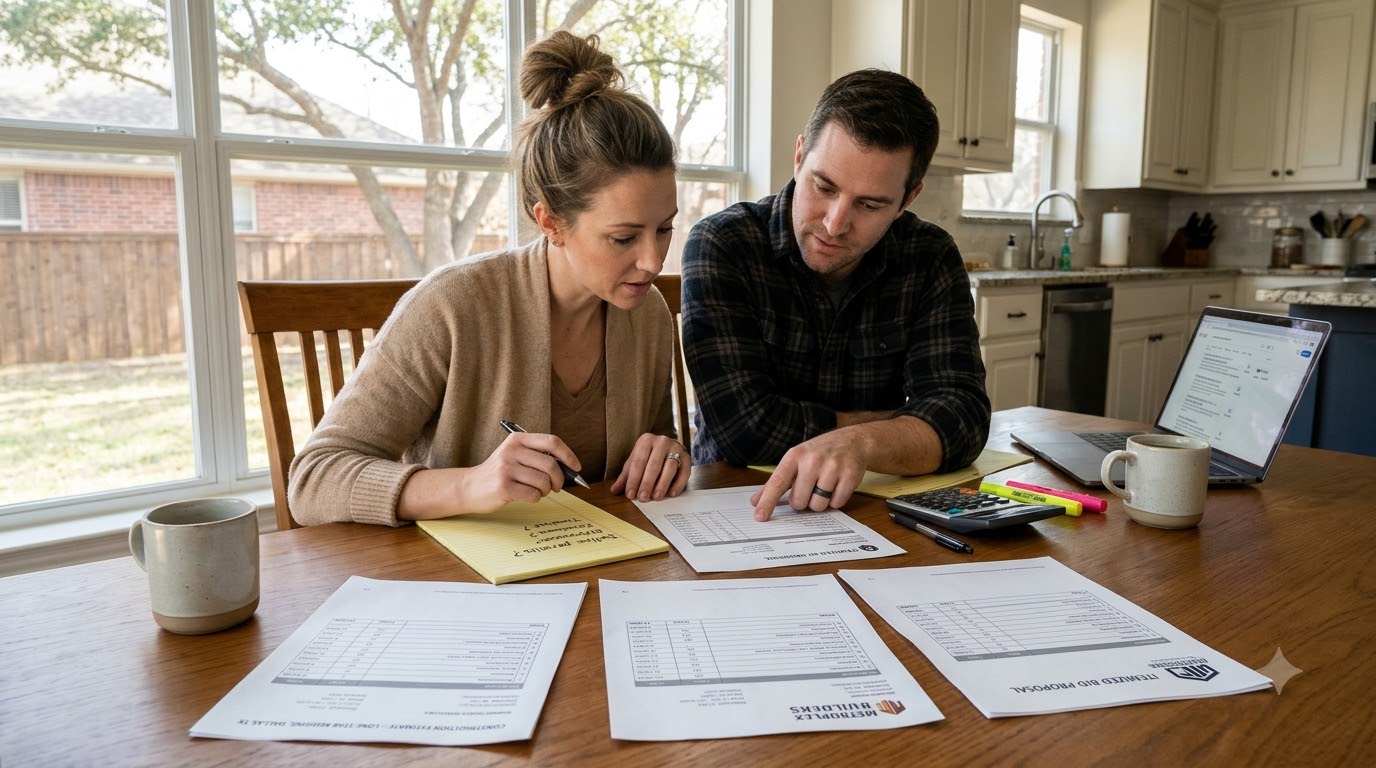
Here is how to hire a general contractor in Dallas without getting burned. Get three itemized bids. Check every trade license and the contractor’s City of Dallas registration. Get proof of insurance straight from the agent. Then sign a written contract with a small deposit and payments tied to finished work.
Dallas General Contractor is a referral service. We match DFW homeowners with vetted, licensed, insured independent contractors, and we have done it since 2003. We do not do the work ourselves. So this guide is the checklist we would hand a friend. It works whether you hire through us or on your own.
How to Hire a General Contractor in Dallas: The Quick Answer
- Define the job. Write down the scope, your budget, and a 10–15% cushion.
- Build a short list. Get names from neighbors, reviews, and trade groups.
- Verify credentials. Check trade licenses, city registration, and insurance.
- Get three itemized bids. Compare them line by line, not by the total.
- Interview the top two. Ask about past Dallas jobs, schedule, and who runs the site.
- Read the contract. Look for scope, price, payment schedule, change orders, and lien terms.
- Confirm the permit. The contractor should pull it in their own name.
What’s in This Guide
- What Dallas projects cost in 2026
- Why the hire matters more in Dallas
- Step 1: Define your project and budget
- Step 2: Find contractors worth a call
- Step 3: Check licenses, registration, and insurance
- Step 4: Get and compare bids
- Step 5: Ask the right questions
- Step 6: Read the contract before you sign
- Red flags that should stop you
- FAQ
What Dallas Remodeling Projects Cost in 2026
Price is the first thing most people ask. These are the 2026 DFW ranges we use across the site. For the full breakdown, see our Dallas contractor cost guide.
| Project | DFW cost range (2026) |
|---|---|
| Guest or secondary bathroom | $8,000–$18,000 |
| Mid-range full bathroom | $18,000–$35,000 |
| Luxury master bathroom | $40,000–$75,000+ |
| Kitchen remodel | $25,000–$65,000 |
| Home addition | $55,000–$350,000+ (UHS Remodeling, 2026) |
Highland Park and Preston Hollow jobs often run higher. Older homes also cost more once the walls come open. That is why the cushion in Step 1 matters.
Why Your Choice of Contractor Matters More in Dallas
The contractor matters more than the tile you pick. A good one plans for problems. A bad one, by contrast, finds them after your money is gone.
Dallas has its own set of problems, too. Expansive clay soil swells in wet springs and shrinks in dry summers. Most homes built after 1980 sit on a post-tension slab, and cutting into one without a specialist can be costly. Homes in Lakewood, the M Streets, and East Dallas often have old wiring and small electrical panels.
A contractor who works these neighborhoods knows to look for all of this. One who mostly builds new homes in Frisco may not. So match the contractor to your house, not just to the project type.
Step 1: Get Clear on Your Project and Budget
Write the scope before you call anyone, because vague scopes get vague bids. “Redo the kitchen” gets you three bids you can’t compare. “Replace cabinets, counters, and flooring, and move the sink two feet” gets you three you can.
Set a real budget, then add a cushion
Hold back 10–15% above the bid for surprises. In older homes, plan for more. For example, East Dallas homes built before 1975 often need 15–20% more for electrical work on a kitchen remodel.
Homes built before 1970 also need an asbestos test before demo. The test runs $200–$400. Removal, if needed, adds $1,500–$4,000.
Know if your project needs a permit
Most work beyond paint and cosmetic fixes needs one. That includes electrical, plumbing, HVAC, structural changes, and additions. Our Dallas permits guide covers what each job needs and what it costs. Highland Park and University Park homes go through their own town building departments, not the City of Dallas.
Step 2: Find Dallas Contractors Worth a Call
Start with people you trust. Ask neighbors who finished a similar job in the last two years. Then check Google reviews, Houzz, Angi, and Nextdoor.
Read the bad reviews first. After all, one angry review is normal. However, the same complaint three times, like missed dates or vanished crews, is a pattern.
Match their experience to your project
Next, ask for photos of jobs like yours, in homes like yours. A contractor who does great bathrooms may not be the right pick for a second-story addition. If you are planning bath work, our Dallas bathroom remodeling page explains how we match for it.
Plan for wait times
Good contractors stay busy. In Frisco, Plano, and McKinney, the top names often book 6–8 weeks out. So start your search early, especially for spring projects.
Want to skip the cold calls? We can match you with vetted Dallas contractors for free. Call +1 (432) 217-9260. We’re open 24 hours, 7 days a week.
Step 3: How to Check a Dallas General Contractor’s License and Insurance
Texas has no state license for general contractors. That surprises most people. Instead, you check three other things.
1. The trade licenses
The people doing electrical, plumbing, and HVAC work must be licensed by the state. Electricians and air conditioning contractors are licensed by TDLR. You can look them up on the TDLR license search. Plumbers are licensed by a different agency, the Texas State Board of Plumbing Examiners.
So ask your general contractor for the names of the trade subs. Then look each one up yourself. It takes five minutes.
2. City of Dallas registration
Contractors must register with the City of Dallas Development Services Department to pull permits. The city’s permit system will not issue a permit to a contractor who isn’t registered or whose insurance has lapsed. So if a contractor can’t pull a permit, ask why.
3. Insurance, from the source
Ask for general liability of at least $1 million per claim. Also ask about workers’ comp. Texas lets private employers skip it, so many contractors don’t carry it. If an uninsured worker gets hurt on your property, you could end up in the middle of it.
Also, don’t accept a photo of a certificate. Ask the contractor’s insurance agent to send it to you directly, with your name on it. Then call the agent to confirm the policy is active.
4. References you actually call
Finally, get two or three references from jobs in the last year. Ask if the job finished on time, how surprises were handled, and whether they would hire the contractor again. If you can, go see one finished job in person.
Step 4: Get Bids and Compare Them the Right Way
Get at least three written bids for the same scope. Then compare the line items, not just the bottom line.
What a good bid spells out
- Labor and materials, listed separately
- Brands, models, and finish levels
- Allowances for items you haven’t picked yet, with dollar amounts
- Permit fees and who pulls the permit
- Demo, haul-off, and cleanup
- A start date and a finish date
Watch the allowances
Low allowances make a bid look cheap, but the savings aren’t real. For instance, a $2,000 tile allowance on a full bath often won’t cover the tile you want. The gap comes out of your pocket later.
The lowest bid is usually low for a reason
Most general contractors add 10–20% on top of labor and materials for overhead and profit, according to Angi. So a bid far below the others is a warning. It often means a missing line item, no insurance, or a plan to make it up in change orders. Ask what’s left out before you assume it’s a deal.
Step 5: Ask the Right Questions Before You Hire
Interview your top two picks. Their answers tell you more than their bids do.
About their experience
- How many jobs like mine have you done in Dallas in the last two years?
- Have you worked on a post-tension slab or a pre-1970 home?
- Who will be on site each day, and who is my contact?
About my project
- What problems do you expect once the walls are open?
- How long will the job take, and what could delay it?
- Will you pull the permit in your company’s name?
About money and paperwork
- What deposit do you need, and when are the other payments due?
- How do you price and approve change orders?
- Will you give me lien releases with each payment?
- What warranty do you offer, and is it in writing?
Also pay attention to how they answer. Clear, fast answers are a good sign. Dodging money questions, however, is not.
Step 6: Read the Contract Before You Sign Anything
Never start a remodel on a handshake. In Texas, a written contract also protects you if a sub or supplier says they weren’t paid.
What every contract should include
- The full scope, matched to the bid
- The total price and what it includes
- A payment schedule tied to finished stages of work
- How change orders are written, priced, and signed
- Start and finish dates
- Who pulls permits and schedules inspections
- Warranty terms and cleanup duties
Texas lien rules that protect you
Texas law gives homeowners a few key protections. First, the contractor must give you a written lien disclosure before you sign (Texas Property Code § 53.255). Then, at final payment, the contractor must give you a bills-paid affidavit. It states that all subs and suppliers have been paid (§ 53.259).
In addition, ask for a lien release with every progress payment. That way, a sub can’t file a lien on your home for money your contractor never passed along.
Payment terms that protect you
Angi puts a reasonable deposit at 10–25% of the job. After that, pay in stages as work is finished and inspected. Hold the last payment until the final inspection passes and your punch list is done.
Who should pull the permit
Your contractor should. So if they ask you to pull it, be careful. On a City of Dallas homeowner permit, you swear you are doing the work yourself. That puts the risk on you, not them. In our view, a contractor who asks you to do this is a contractor to skip.
Red Flags That Should Stop You Cold
- Pressure to sign today. “This price is only good until Friday” is a sales trick.
- A big upfront payment. Anything near half the job before work starts is a warning.
- Cash only. It leaves you with no paper trail.
- No local address. A truck and a cell phone aren’t a business.
- Slow or no proof of insurance. A real contractor can get you a certificate in a day.
- Vague answers on scope or price. Vague bids turn into big change orders.
- No references. Or references who never pick up.
For more warning signs, read 10 red flags when hiring a Dallas contractor.
Where a Referral Service Fits In
You can do every step above on your own. It just takes time, though. Most homeowners spend two to four weeks building a short list and checking it.
We do the first part for you. We check contractors before they join our network. Then we match you with ones who fit your job and your part of town. [CLIENT TO SUPPLY: exact vetting criteria, e.g. insurance minimum, registration check, reference checks]. You still get the bids, ask the questions, and make the call. The match is free to homeowners, and you are never required to hire anyone we suggest.
Common Questions About Hiring a Contractor in Dallas
Does a general contractor need a license in Texas?
No. Texas has no state license for general contractors. However, TDLR licenses electricians and air conditioning contractors. Plumbers are licensed by the Texas State Board of Plumbing Examiners. In Dallas, contractors must also register with the City of Dallas Development Services Department to pull permits. Check all of these before you hire, not after.
How long does it take to hire a contractor in Dallas?
Plan on two to four weeks. That covers building a short list, getting bids, checking credentials, and signing a contract. In busy suburbs like Frisco and Plano, the best contractors may not start for 6–8 weeks after that. So begin your search well before you want work to start.
How do I know if a bid is fair?
Compare three itemized bids for the same scope. Look at the line items, the allowances, and what each one leaves out. A fair bid lands near the others and explains every cost. If one bid is far lower, ask what’s missing. Our cost guide shows 2026 DFW ranges by project type.
What if a contractor asks for all the money upfront?
Walk away. A reasonable deposit is 10–25% of the job. After that, payments should follow finished work. A contractor who needs most of the money first may be covering debts on another job. If you lose that money, it can be very hard to get back.
Who pulls the permit for a Dallas remodel?
Your contractor should pull it in their own company name. The City of Dallas only issues permits to registered contractors with current insurance. If you pull a homeowner permit instead, you swear you are doing the work yourself. That shifts the risk to you. In Highland Park or University Park, permits go through the town, not the city.
How do I keep my remodel from going over budget?
Set aside 10–15% above the bid, and more for older homes. Pick your finishes before the contract, so allowances match real prices. Get every change in writing, with a price, before work on it starts. Finally, tie payments to finished stages so you are never paying ahead of the work.
Ready to Hire a General Contractor in Dallas?
Here’s how a match works. You tell us about your project. We reply within 24 hours and connect you with vetted, licensed, insured contractors who fit your job. Then you compare bids and choose. There is no cost to you.
Call +1 (432) 217-9260 any time, 24 hours a day, 7 days a week. Or get a free quote online.
Related Reading
- What a Dallas contractor costs in 2026
- Warning signs to watch for with Dallas contractors
- A homeowner’s guide to Dallas construction permits