
Published: May 14, 2026 |
Updated: May 14, 2026 |
By: Dallas General Contractor Editorial Team
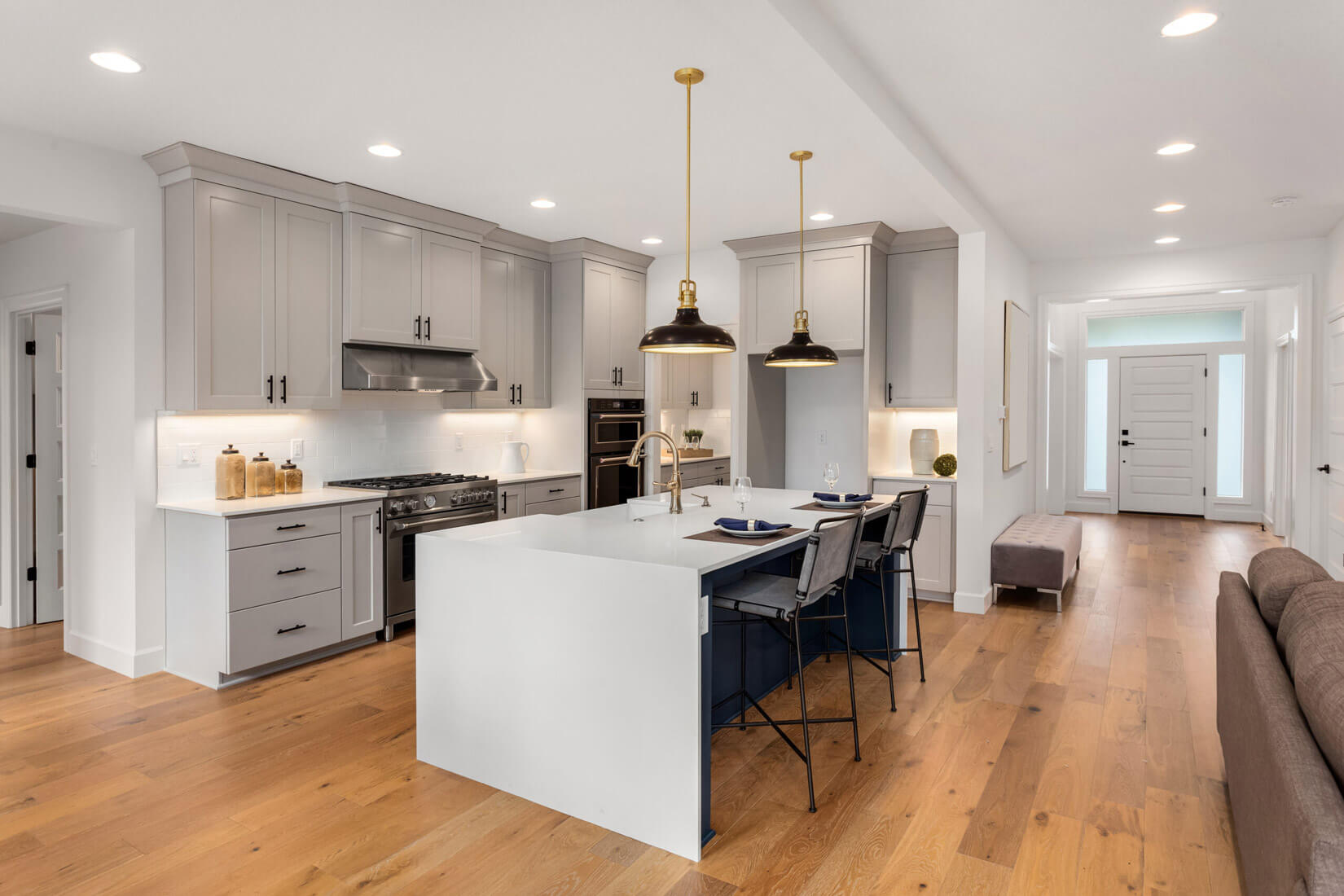
Many Dallas homes — especially those built before 1985 — have the same problem. The kitchen is closed off. It feels small. You can’t see the living room from the stove. And every dinner party means the cook is cut off from the guests.
An open concept kitchen in Dallas fixes this. But before you knock anything down, you need to know three things: what it actually costs, whether your wall is load-bearing, and what the City of Dallas requires for permits.
This guide answers all three. We’ll also cover design tips that work for real DFW homes, the neighbourhoods where this project makes the most financial sense, and what to ask a contractor before you sign anything.
In This Guide
- What “open concept kitchen” actually means
- Is your Dallas home a good fit?
- What it costs to open up a Dallas kitchen (2026)
- 5 design rules that work in DFW homes
- Dallas permits for kitchen wall removal
- Honest pros and cons
- How to find the right contractor in Dallas
- Common questions
What “Open Concept Kitchen” Actually Means
An open concept kitchen is one with no full wall between the kitchen and the living or dining area. Instead, the spaces flow into each other. You might have an island that marks the boundary. Or just open floor space.
The goal is flow. You can talk to guests while you cook. Kids at the dining table are visible from the stove. The whole ground floor feels bigger — even if the square footage hasn’t changed.
Some homeowners go fully open — no walls at all between three spaces. Others go semi-open, with a pass-through or half-wall that keeps some separation while still letting light and conversation through. Both are valid. The right choice depends on your floor plan and how you actually use your home.
Is Your Dallas Home a Good Fit for This Remodel?
The short answer: it depends on your home’s age and floor plan. Here’s the honest breakdown for Dallas specifically.
Homes built before 1980 — East Dallas, Oak Cliff, Lakewood, M Streets
These are the homes where open concept conversions happen most often — and where they’re most complex. The walls that separate the kitchen from the living room in a 1950s or 1960s Dallas bungalow are almost always load-bearing. They run perpendicular to the roof joists and carry real structural load.
That doesn’t mean the wall can’t come down. It means you need a structural engineer first — and a proper beam installed to carry the load the wall was carrying. Budget for that cost before you start talking cabinets.
Homes built 1980–2000 — North Dallas, Plano, Frisco, Irving
These tend to have more builder-standard floor plans. The walls between kitchen and living room may or may not be load-bearing. Some are. Some are just partition walls that can come down for $2,000–$4,000. A contractor can usually tell you which you have after a quick inspection.
Homes built after 2000 — newer DFW suburbs
Many of these already have open or semi-open layouts. If you’re in a newer home and still feel the kitchen is closed off, the fix might be a kitchen remodel — updated island, better lighting, flooring continuity — rather than wall removal.
What It Costs to Open Up a Dallas Kitchen in 2026
Here’s the real number range for the DFW market. These are based on what contractors are quoting in 2026 — not national averages from two years ago.
| Scope of Work | Dallas Cost Range (2026) | Notes |
|---|---|---|
| Non-load-bearing wall removal | $2,000–$5,000 | Includes demo, patch, paint, permit |
| Load-bearing wall removal (single-story) | $5,000–$15,000 | Beam, engineer fee, permit, finishing |
| Structural engineering fee (Dallas) | $500–$2,000 | Required for any load-bearing change |
| Electrical rerouting inside wall | $800–$3,000 | Common in pre-1980 Dallas homes |
| HVAC duct rerouting | $1,000–$3,500 | If ducts run through the removed wall |
| Flooring to match new open space | $3,000–$10,000 | Depends on material and square footage |
| Dallas permit fee (wall + structural) | $500–$1,500 | City of Dallas Development Services |
Total range for a wall removal and open kitchen conversion in Dallas: $15,000–$45,000 depending on what’s in the wall, whether it’s load-bearing, and how much finish work follows.
The cost line that catches people off guard
Flooring. When you remove a wall, you have a gap in the floor where the wall sat. And the kitchen floor rarely matches the living room floor in older Dallas homes. Matching or replacing both sides can add $3,000–$10,000 to your project — and it’s often not in the first quote you get.
Ask your contractor upfront: does your quote include flooring through the new open area?
What’s usually inside Dallas walls (and what it costs)
In Dallas homes built before 1985, you often find electrical wiring and HVAC ducts running through kitchen walls. Moving those adds $1,800–$6,500 to your project, depending on how much has to move and what the current system looks like.
In homes built before 1970 in areas like Oak Cliff and East Dallas, asbestos in wall materials is also possible. Testing costs $200–$400. Removal, if needed, adds $1,500–$4,000. A good contractor will flag this before demo begins — not after.
5 Design Rules That Work in Dallas Homes
Removing a wall is one decision. Designing the space well after is another. Here are five things that actually work in DFW homes — not just in magazine spreads.
1. Define zones without walls
The kitchen, dining, and living areas need their own identity — even in an open plan. Use rugs, pendant lighting, and ceiling treatments to mark each zone. In Texas homes with 9- or 10-foot ceilings, this works beautifully. Without zone definition, the space just feels like one big room with no direction.
2. Get your ventilation right — this matters in Dallas
When your kitchen is open to the living area, cooking smells go everywhere. A standard over-the-range microwave won’t cut it. Invest in a proper range hood — ducted to the outside, not recirculating. Plan for 600–900 CFM for a standard Dallas kitchen. This should be in your budget from day one, not an afterthought.
3. Match the flooring through the whole space
The most common mistake in open concept remodels is keeping two different floor materials on either side of where the wall was. It reads as two rooms, even without the wall. Run the same hardwood, LVP, or tile through the entire connected space. If that means replacing flooring in the living room too — factor it in early.
An open plan kitchen in North Dallas with an island that defines the kitchen zone. Matching LVP flooring runs through the kitchen and into the living area.
4. Size your island for your actual space
Big islands look great online. In a real Dallas home with a 12-foot kitchen opening, a 4-foot-wide island may leave the traffic lanes too tight. The standard rule: 36 inches of clearance on all working sides. Measure your actual opening before you commit to an island size — not the one that looks good in the render.
5. Plan for sound from day one
Open spaces carry sound. Dishwasher noise, TV from the living room, kids at the table — it all mixes together. Area rugs absorb sound. Upholstered seating helps. If you’re in a home where noise levels are already a concern — many Dallas homeowners with young kids flag this — consider a semi-open plan with a low half-wall or peninsula instead of full removal.
Dallas Permits for Kitchen Wall Removal
Permits are not optional. The City of Dallas Development Services Department requires permits for any work that touches walls, structural elements, electrical wiring, or HVAC systems.
Here’s what to expect in Dallas specifically:
- Structural permit: Required if any wall removal is involved. Fee: $500–$1,500 depending on project value and scope
- Electrical permit: Required if wiring is moved or added. Pulled by a licensed electrician
- Mechanical permit: Required if HVAC ducts are moved. Pulled by the HVAC sub
- Inspections: Framing, electrical rough-in, and final inspections are standard for this scope of work
Your contractor pulls all permits. If a contractor suggests skipping permits to save time or money, that’s a hard stop — do not proceed. Unpermitted structural work creates real problems when you sell the home, and can require you to undo the work during a buyer’s inspection.
If your home is in Highland Park or University Park, permits go through the town’s own building department (not City of Dallas). Allow 2–4 extra weeks for the review process, and expect stricter standards on finishing work visible from the exterior.
📞 Not sure if your Dallas kitchen wall is load-bearing?
We can match you with a vetted Dallas contractor who will walk your home and give you a straight answer — no charge, no obligation.
Call or text: +1 (432) 217-9260
|
Get a Free Quote →
Honest Pros and Cons of Open Concept in a Dallas Home
This project is popular for a reason. But it’s not right for every home or every family. Here’s the real picture.
The real pros
- The home feels bigger — even without adding square footage
- Better natural light — especially if windows in one room can now light two
- Easier to watch kids — a huge factor for Dallas families with young children
- Strong buyer appeal — open floor plans are the most-requested layout in DFW real estate
- Better flow for entertaining — the cook is part of the party, not isolated
The real cons
- Cooking smells travel — you need good ventilation; budget for it
- Noise travels too — TV, blender, dishwasher all share the same air
- Less wall space — fewer walls means fewer places for large furniture, art, and storage
- Structural surprises in older homes — East Dallas and Oak Cliff homes often hide old wiring and ductwork in those walls
- It’s not reversible cheaply — putting a wall back is a real cost if you change your mind
If you’re not sure whether a full open plan or a semi-open plan is right for your home, a vetted contractor can look at your actual floor plan and give you an honest recommendation. This is worth doing before you commit to a design.
How to Find the Right Dallas Contractor for This Project
Opening a kitchen is not a handyman job. You need a licensed general contractor who coordinates the structural engineer, electrician, HVAC sub, and finish carpenter — all in the right order.
Here’s what to check before you hire anyone in Dallas:
- Texas licence: Verify with the Texas Department of Licensing and Regulation (TDLR). General contractors in Texas are not individually required to hold a GC licence, but electrical, plumbing, and HVAC subs are. Make sure each trade sub is licensed
- Experience with load-bearing work: Ask specifically: “How many load-bearing wall removals have you done in Dallas homes?” Get a straight number
- In-house structural engineer or a preferred engineering firm: The contractor should have a clear process for this — not figure it out once you’ve signed
- Permit history: Ask to see a recent permit they pulled for a structural project in the City of Dallas. A contractor who hasn’t pulled permits recently in your jurisdiction may not know the current process
- Three bids minimum: For any project over $15,000, get three bids. Prices for the same scope vary by $5,000–$15,000 in the Dallas market
We match Dallas homeowners with vetted independent contractors for exactly this kind of project — ones who know the City of Dallas permit process, understand older DFW home construction, and give itemised bids so you can see where every dollar is going.
Common Questions About Open Concept Kitchens in Dallas
How much does an open concept kitchen remodel cost in Dallas?
In Dallas, opening a kitchen to a living or dining room costs $15,000–$45,000 for the full project. A non-load-bearing wall removal runs $2,000–$5,000. A load-bearing wall in a single-story Dallas home adds $5,000–$15,000 for the beam, engineering, and permits. Flooring and finish work adds on top of that. These are 2026 DFW market numbers — not national averages.
Do I need a permit to open up my kitchen in Dallas?
Yes. Any work that removes a wall — load-bearing or not — requires a permit through the City of Dallas Development Services Department. Structural changes, electrical rerouting, and HVAC moves each go through their own inspection. Skipping permits creates serious problems when you sell the home.
How do I know if my kitchen wall is load-bearing?
You can’t tell by looking. A licensed contractor or structural engineer has to check the framing above and below, and sometimes review the original house plans. In Dallas homes built before 1985 — especially in East Dallas, Oak Cliff, and Lakewood — most interior walls running perpendicular to the roof joists are load-bearing. Always verify before any demo work starts.
How long does this project take from start to finish?
Plan for 6–12 weeks total. Engineering drawings take 2–4 weeks. Dallas permit approval adds another 2–4 weeks. The actual wall removal and beam install takes 2–5 days. Kitchen finish work adds 3–6 weeks. And good DFW contractors book 4–8 weeks out — so start planning earlier than you think.
Does an open concept kitchen add value to a Dallas home?
Yes, for most Dallas homes. Open floor plans are a top request among DFW buyers. A well-done open kitchen remodel typically returns 60–75% of project cost at resale, per the 2025 Cost vs. Value Report for the South Central US region (Remodeling Magazine). In Highland Park, Lakewood, and East Dallas, open layouts are now expected in updated homes — and closed kitchens are a noted negative in buyer feedback.
📋 Ready to Get a Real Number for Your Dallas Kitchen?
Tell us about your project. We’ll match you with a vetted Dallas contractor who will walk your home, confirm whether your wall is load-bearing, and give you an itemised quote — so you know exactly what you’re looking at before you commit to anything.
No obligation. No pressure. Just straight answers from someone who knows Dallas homes.
Call or text: +1 (432) 217-9260
|
Web: dallasgeneralcontractor.net
|
Get a Free Quote →
Related Reading
- Kitchen Remodeling in Dallas: 2026 Trends, Costs & Layouts
- Whole Home Renovation vs. Room-by-Room: What’s Best for Dallas Homeowners?
- How Much Does a Contractor Cost in Dallas? [2026 Guide]